
Did you know regular car care can make your vehicle last up to 50% longer? This not only improves how well it runs but also makes it more appealing to buyers when you decide to sell.
Keeping your car in good shape might seem hard, but we’re here to help. Our guide has all you need to know, from simple checks to car maintenance basics you can do yourself. You’ll be ready to tackle any maintenance task.
Key Takeaways
- Regular checks can prevent costly repairs.
- DIY maintenance can save you money.
- Proper upkeep enhances vehicle performance.
- A well-maintained vehicle is more attractive to buyers.
- Regular maintenance can increase your car’s lifespan.
Understanding the Importance of Car Maintenance
Knowing the value of car maintenance can prevent expensive repairs later. It’s not just about keeping your car in shape. It’s also about staying safe on the road and making your car last longer.
Why Regular Maintenance Matters
Regular maintenance is key because it spots problems early. By sticking to a maintenance schedule, your car will run better and use less fuel. This boosts its performance and saves you money on gas.
Key benefits of regular maintenance include:
- Enhanced safety through regular checks on critical systems like brakes and tires.
- Improved fuel efficiency, which can save you money on gas.
- Prolonged vehicle life by addressing wear and tear early.
Consequences of Neglecting Maintenance
Ignoring car maintenance can cause big problems. It can lead to lower fuel efficiency, worse performance, and even major breakdowns. Not keeping up with maintenance can lead to expensive fixes that could have been avoided.
The risks of neglecting maintenance include:
- Increased risk of accidents due to faulty brakes or other critical system failures.
- Higher repair costs because small issues are allowed to become major problems.
- Potential for complete engine failure, requiring expensive replacements.
By understanding the importance of car maintenance and following a routine, you can avoid these issues. We suggest adding car care tips to your daily routine to keep your car in top shape.
Key Components of Your Vehicle to Maintain
Keeping your vehicle in top shape is key for its long life and performance. It’s all about knowing the important parts that need regular care. A well-kept vehicle not only runs better but also keeps you safe while driving.
To make a good vehicle maintenance checklist, focus on a few main areas. These include the engine and transmission, brakes and tires, and the battery and electrical system. We’ll look at each part and what checks you should do and how often.
Engine and Transmission
The engine and transmission are the heart of your car. Keeping them in good shape is essential for the best performance. Here are some key checks for your car maintenance schedule:
- Oil levels: Check oil levels often and add more as needed. Make sure you use the right oil for your car.
- Transmission fluid: Make sure the transmission fluid is at the right level and change it when the manufacturer says to.
- Coolant: Check the coolant level and its condition to avoid overheating.
Brakes and Tires
Your car’s brakes and tires are vital for safety. Regular checks can help avoid accidents and make your ride smoother.
- Brake pads: Look for wear on brake pads and replace them when needed.
- Tire pressure: Check tire pressure every month and keep it at the recommended level.
- Tread depth: Make sure your tires have enough tread to keep traction.
Battery and Electrical System
The battery and electrical system are essential for starting your car and powering accessories. Here are some tips for maintenance:
- Battery terminals: Clean battery terminals to stop corrosion.
- Battery condition: Check the battery’s condition and charge level.
- Fuses and wiring: Look for any damage or wear on fuses and wiring.
By focusing on these key parts and adding them to your car maintenance schedule, you can keep your vehicle in great shape. Regular care not only extends your car’s life but also makes driving safer.
Developing a Car Maintenance Schedule
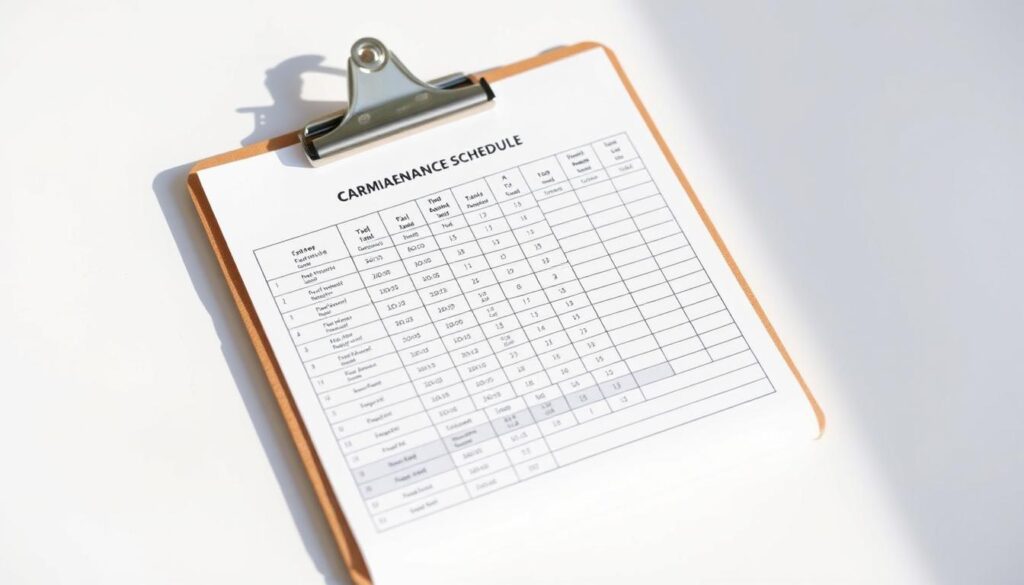
A well-planned car maintenance schedule is key for your vehicle’s best performance. It helps spot issues early, saving money and keeping you safe.
Break down maintenance into daily, weekly, monthly, and seasonal tasks. This makes DIY car care easier to handle.
Daily and Weekly Checks
Daily checks are quick and simple. They help catch immediate problems. Check your dashboard lights, tire pressure, and look for leaks under the car.
- Check your oil and other fluid levels weekly.
- Inspect your tires for wear and tear.
- Ensure all lights are working right.
Monthly Maintenance Tasks
Monthly tasks are more detailed. They keep your car healthy. Some tasks include:
- Checking and topping off fluids like coolant, brake fluid, and transmission fluid.
- Inspecting your battery and electrical system for wear.
- Rotating your tires for even wear.
Car maintenance tips and tricks include using a maintenance log. It helps you track your progress and stay organized.
Seasonal Maintenance Tips
Seasonal maintenance is key for your car’s weather readiness. Before winter, check antifreeze levels, battery condition, and use winter tires if needed.
In conclusion, a car maintenance schedule with daily, weekly, monthly, and seasonal tasks keeps your car in top shape. By following these DIY car maintenance tips, you’ll save money and extend your vehicle’s life.
How to Change Your Oil and Filter
Changing your oil and filter is a key car maintenance task. It keeps your engine well-lubricated. This reduces wear and tear and prevents overheating.
Choosing the Right Oil
It’s important to pick the right oil for your car. Check your car’s manual for the recommended oil type and viscosity. The wrong oil can harm your car’s performance and engine.
Key considerations when selecting oil include:
- Viscosity: The oil’s thickness and flowability.
- Type: Synthetic, conventional, or a blend.
- Certifications: Look for oils that meet or exceed your car’s manufacturer standards.
Tools You’ll Need
To change your oil and filter, you’ll need basic tools. Having everything ready makes the process easier.
Gather the following:
- Socket wrench or ratchet.
- Oil drain pan.
- New oil filter.
- Oil filler cap.
- New oil (the correct type and amount for your vehicle).
Step-by-Step Oil Change Process
Now that you have everything, follow these steps to change your oil and filter:
- Drain the Old Oil: Find the oil drain plug underneath your car. Position the oil drain pan and remove the plug. Let the oil drain completely.
- Replace the Oil Filter: Remove the old oil filter and dispose of it properly. Install a new oil filter by hand tightening it in a clockwise direction.
- Refill with New Oil: Pour in the new oil, following your manual for the correct type and amount.
- Check for Leaks: Start your car, let it run for a few minutes, and then check underneath for any signs of leaks.
- Dispose of Used Oil: Take the used oil to a recycling center or an auto parts store that accepts used oil.
By following these steps, you can confidently perform an oil change. This ensures your car’s engine stays well-maintained and runs smoothly.
Tire Care and Maintenance
Tire care and maintenance are key parts of car ownership that are often missed. Keeping your tires in good shape improves your car’s performance and safety. It also lowers the chance of tire problems on the road.
Checking Tire Pressure
One of the easiest yet most important car care tips is to keep your tires at the right pressure. If your tires are underinflated, they can use more fuel, wear unevenly, and even blow out. Always check your tire pressure monthly and before long drives.
- Use a reliable tire pressure gauge.
- Check pressure when tires are cold.
- Refer to your vehicle’s manual for the recommended pressure.
Tread Depth and Alignment
Checking your tire’s tread depth is another key part of vehicle maintenance checklist. Worn-out treads can make your car harder to stop and steer. Also, keeping your wheels aligned ensures your tires wear evenly and your car drives smoothly.
- Use a penny to check tread depth.
- Look for signs of uneven wear.
- Have your alignment checked annually.
When to Rotate Your Tires
Rotating your tires regularly is important for even wear and longer life. We recommend rotating your tires every 5,000 to 8,000 miles, or as your car’s maker suggests.
- Follow the rotation pattern recommended by your vehicle’s manufacturer.
- Check your owner’s manual for specific guidance.
- Consider having a professional inspect your tires during rotation.
By following these car care tips and adding tire care to your vehicle maintenance checklist, you’ll enjoy a smoother ride. You’ll also improve your car’s performance and stay safe on the road.
Brake System Inspection and Care
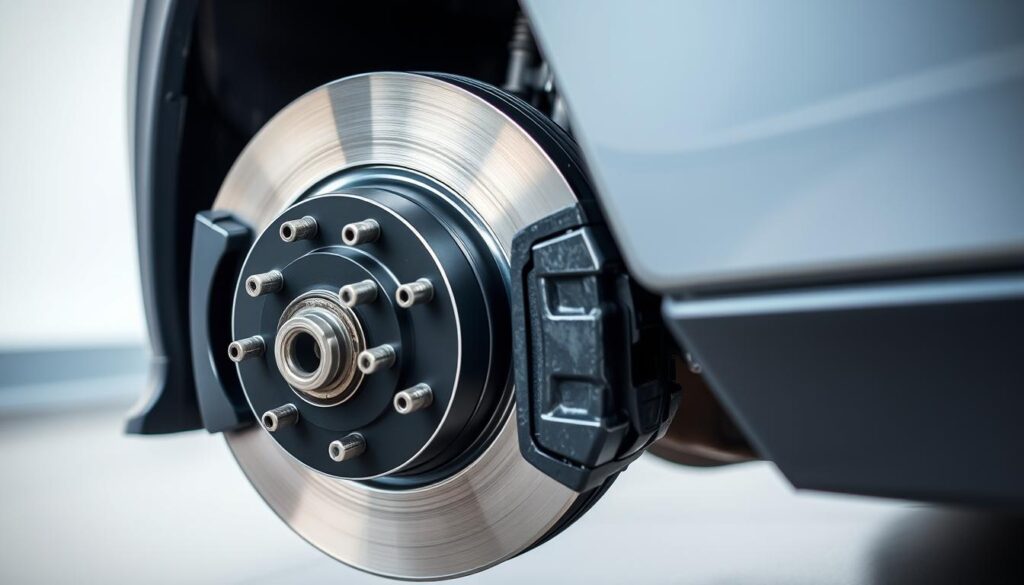
Regular brake system inspections are key to keeping your vehicle safe. Your car’s brakes are a vital safety feature. They need regular checks to work right.
Signs of Brake Wear
Spotting brake wear early can stop bigger problems. Look out for these signs:
- Squealing or grinding noises when applying the brakes
- Vibrations or pulsations when braking
- A soft or spongy brake pedal
- Visible wear on brake pads or rotors
These signs mean your brakes need attention. If you ignore them, you risk your safety on the road.
Importance of Regular Inspections
Regular checks are vital for your brake system’s health. We suggest brake inspections every 10,000 to 15,000 miles as part of your car’s maintenance.
A mechanic will look at your brake pads, rotors, and more during an inspection. This helps:
- Prevent brake failure and accidents
- Find issues before they get worse
- Keep your vehicle safe and running well
By focusing on brake inspections and care, you keep your vehicle safe and reliable. This gives you peace of mind while driving.
Understanding Fluid Levels and Their Importance
To keep your car running well, knowing about fluid levels is key. These fluids help your car work right, from keeping parts moving to cooling the engine. If you ignore them, your car could get damaged and cost a lot to fix.
Oil, Coolant, Brake Fluid, and More
Your car needs different fluids to run well. Engine oil keeps the engine’s parts moving smoothly. Coolant, or antifreeze, keeps the engine at the right temperature. Brake fluid helps your brakes work right, pressing down on the brake calipers when you press the brake pedal.
Other important fluids include transmission fluid and power steering fluid. Transmission fluid helps the transmission work smoothly. Power steering fluid makes steering easier.
How to Check Fluid Levels
Checking your car’s fluid levels is easy to do at home. Here’s how:
- Make sure your car is parked on a level surface.
- Turn off the engine and let it cool down.
- Find the fluid reservoirs under the hood. Look in your owner’s manual if you’re not sure.
- Check each fluid level against the marks on the reservoir.
- If a level is low, add the right type of fluid.
Checking and keeping your car’s fluid levels up is simple but important. It helps your car run better and last longer. By knowing about these fluids and how to check them, you can help your car stay in good shape.
The Role of Filters in Your Car’s Performance
Filters are key to keeping your car running well and lasting longer. They make sure the air and fuel going into your engine are clean. This is important for your engine to work its best and use fuel efficiently.
There are many types of filters in your car, each with its own job. We’ll look at these filters and how to take care of them.
Types of Filters to Monitor
Your car has several important filters that need to be checked often:
- Air Filter: Keeps dust and dirt out of the engine, helping your car run better and use less fuel.
- Fuel Filter: Makes sure clean fuel gets to the engine, protecting it from harmful stuff.
- Cabin Filter: Cleans the air inside your car, making it healthier and reducing allergens.
- Oil Filter: Cleans the engine oil, helping your engine last longer.
When to Replace Filters
It’s important to replace filters regularly to keep your car in good shape. Here’s when to do it:
- Air Filter: Needs to be replaced every 15,000 to 30,000 miles.
- Fuel Filter: Should be swapped out every 15,000 to 20,000 miles.
- Cabin Filter: Best to replace every 12,000 to 18,000 miles.
- Oil Filter: Change it with every oil change, which is usually every 5,000 to 7,500 miles.
By following these tips and doing some DIY car care, you can keep your vehicle running smoothly. Checking and replacing filters is a big part of taking care of your car.
Seasonal Car Care Tips
As the seasons change, your car’s needs change too. You need to adjust your car maintenance schedule to keep it running well. This is key to keeping your vehicle in top shape all year.
Preparing Your Car for Winter
Winter can be tough on cars. Cold weather can make batteries drain faster, tires lose pressure, and fluids thicken. To get your car ready for winter, start by checking your battery’s health and making sure it’s fully charged.
- Check your tire pressure and tread depth to ensure they can handle snowy and icy conditions.
- Consider switching to winter tires for improved traction.
- Use a winter-grade oil that can flow more easily in cold temperatures.
- Make sure your antifreeze is rated for the lowest temperatures in your area.
Inspecting your belts and hoses is also key before winter. Cracked or worn-out parts can fail when you need them most.
Summer Maintenance Checklist
Summer brings its own challenges, like high temperatures that can cause engine overheating and tire wear. To keep your car running smoothly in summer, follow this checklist:
- Check your coolant level and condition to prevent overheating.
- Inspect your tires for signs of wear and maintain the recommended pressure.
- Ensure your air conditioning system is working efficiently to keep you cool.
- Check your belts and hoses for signs of wear and replace them if necessary.
By following these car care tips and adjusting your car maintenance schedule for each season, you can extend your vehicle’s life. This ensures it runs smoothly all year.
Resources for Car Maintenance Help
Keeping your car in good shape can seem hard, but it’s doable with the right tools. Our car maintenance guide covers everything from oil changes to tire care. To help more, we suggest using apps and tools to keep up with maintenance.
Recommended Tools and Apps
Apps like Fuelly and GasBuddy can track your car’s maintenance needs. They help you watch your fuel use, track miles, and remind you of maintenance. For a detailed guide, the CarCare app is a great resource.
Finding a Reliable Mechanic
Finding a good mechanic is key for car care. Ask friends or family for recommendations, or look up reviews on Yelp. With these tips, you’ll be ready for any maintenance task and keep your car running well.