
Did you know millions of cars are retired every year? This leaves owners with the tough task of disposal. Our company makes this easier by providing quick cash for car sellers. We aim to make old vehicle recycling simple and fast.
Getting rid of an old car can be a big hassle. That’s why we offer clear and quick service. We make sure you get cash for your old vehicle quickly.
Key Takeaways
- Immediate cash solutions for car sellers
- Transparent and efficient recycling process
- Environmentally friendly disposal methods
- Quick and hassle-free transaction
- Expert guidance throughout the recycling process
What is Old Car Recycling?
Vehicle recycling, or auto salvage, is key to cutting down on car waste. We aim to make recycling old cars easy and green.
Definition and Purpose
Old car recycling means taking apart and recycling cars that can’t run anymore. It’s all about getting valuable stuff like metals, plastics, and rubber. It also deals with harmful materials safely.
The main perks of old car recycling are:
- It saves natural resources by using materials again
- It cuts down on landfill waste and pollution
- It saves energy compared to making new stuff
Importance in Reducing Waste
Recycling old cars is vital for less waste and less harm to our planet. It helps in many ways:
- It gets materials for making new things
- It lowers the need for getting, processing, and moving raw stuff
- It lessens the amount of bad waste in landfills
Recycling your old car helps our planet and supports green practices.
Benefits of Recycling Old Cars
Recycling old cars is good for the environment. It helps us use resources wisely and makes our future greener.
Environmental Advantages
Recycling cars saves natural resources. It uses metals, plastics, and rubber again. This means we don’t need to mine as much.
Eco-friendly car scrapping also keeps pollution down. It handles dangerous stuff like batteries and fluids safely.
Economic Impact
The recycling industry creates jobs and makes money. Environmentally friendly auto dismantling saves on waste and pollution costs.
- Job creation in recycling facilities
- Revenue generation from the sale of recyclable materials
- Cost savings from reduced waste disposal
Community Benefits
Recycling facilities help local communities. They offer cheap ways to get rid of old cars. This promotes a cleaner, healthier place to live.
We can all help the environment and economy by recycling cars responsibly.
The Old Car Recycling Process
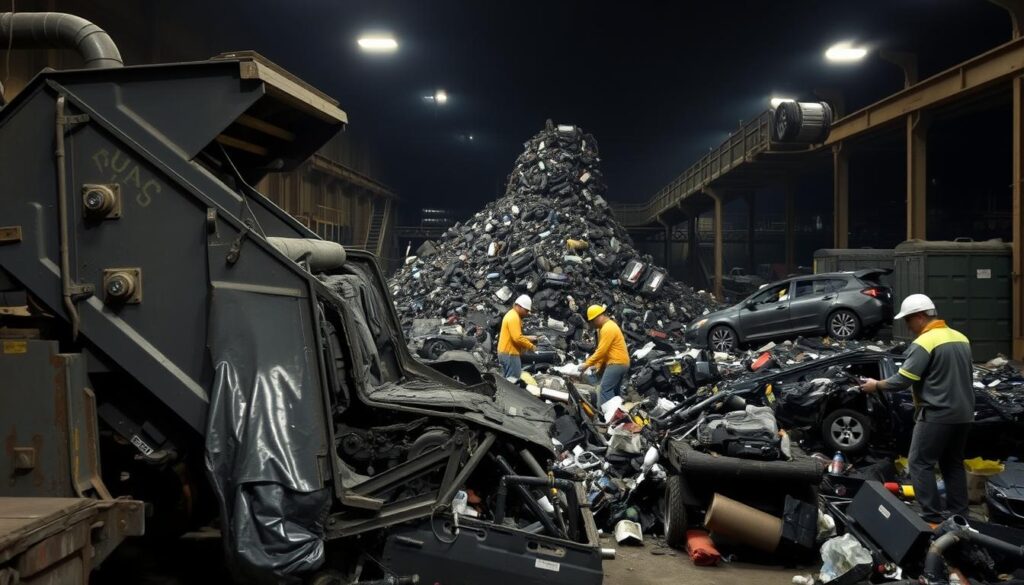
Recycling old cars is key to reducing environmental harm. We take care to recycle vehicles in a way that’s good for the planet. Our method is both efficient and eco-friendly.
Initial Assessment and Appraisal
The first step is checking the car’s condition. We evaluate the vehicle’s condition to see what can be reused or recycled. This helps cut down on waste.
We look at the car’s age, condition, and part demand during appraisal. This helps us give a fair value assessment.
Dismantling the Vehicle
After appraisal, we dismantle the car. We carefully disassemble the vehicle, saving parts for reuse or recycling. This includes engines, transmissions, batteries, and tires.
Our team is skilled in dismantling. They make sure all reusable parts are saved and hazardous materials are disposed of correctly.
Processing Materials
After dismantling, we process the materials. We ensure that materials are handled and processed in an environmentally responsible manner. We follow all regulations and standards.
The processed materials can be used to make new products. This reduces the need for raw materials and lowers environmental impact.
Our recycling process is both good for the planet and cost-effective. We aim to make car disposal smooth and responsible.
How to Choose a Reputable Recycling Facility
It’s important to choose a reliable recycling facility for your old car. We’re here to help you find the right place for responsible disposal.
When looking for a recycling facility, consider a few key factors. Here are some steps to help you choose wisely:
Researching Local Options
First, search for local recycling facilities that offer scrap car removal services. Start with an online search. Look at reviews and ratings to see how they’re viewed.
- Check online reviews and ratings.
- Ask for referrals from friends or family members.
- Verify their credentials and certifications.
By doing your research, you can find facilities known for good scrap car removal.
Evaluating Eco-Friendly Practices
A good recycling facility follows eco-friendly practices. Look for these signs:
- Check if they have a proper disposal method for hazardous materials.
- Ensure they follow environmentally friendly recycling processes.
- Look for certifications that indicate their commitment to eco-friendly practices.
By checking these, you can be sure your car is recycled in a way that’s good for the planet.
Choosing a reputable recycling facility is key for responsible scrap car removal. By researching and checking their eco-friendly practices, you make a choice that’s good for you and the planet.
Items that Can Be Recycled from Old Cars
As a junk car buyer, we know old cars have many recyclable parts. These parts can be reused, saving raw materials and protecting the environment.
Metals and Alloys
Old cars are full of metals like steel, aluminum, and alloys. These can be melted down for new cars or other metal products.
- Steel and Iron: These metals are in the car’s body and engine.
- Aluminum: Used in engine blocks and wheels because it’s light and doesn’t rust.
- Copper and Brass: In radiators and electrical systems, these metals are valuable for their ability to conduct and last long.
Plastics and Rubber
Old cars also have lots of plastics and rubber that can be recycled.
- Plastic Components: Bumpers and dashboards are made from plastics that can be reused.
- Tires: Tires can be recycled into new tires or used for mulch or playground surfaces.
Oils and Fluids
Old cars also have fluids that need to be disposed of right. These include engine oil, transmission fluid, brake fluid, and coolant.
- Engine Oil: Can be recycled for use as lubricating oil or fuel in industrial settings.
- Other Fluids: Transmission and brake fluids can be recycled or disposed of safely.
Recycling these materials helps reduce waste and saves natural resources. As a junk car buyer, we make sure these materials are recycled properly.
How to Prepare Your Car for Recycling
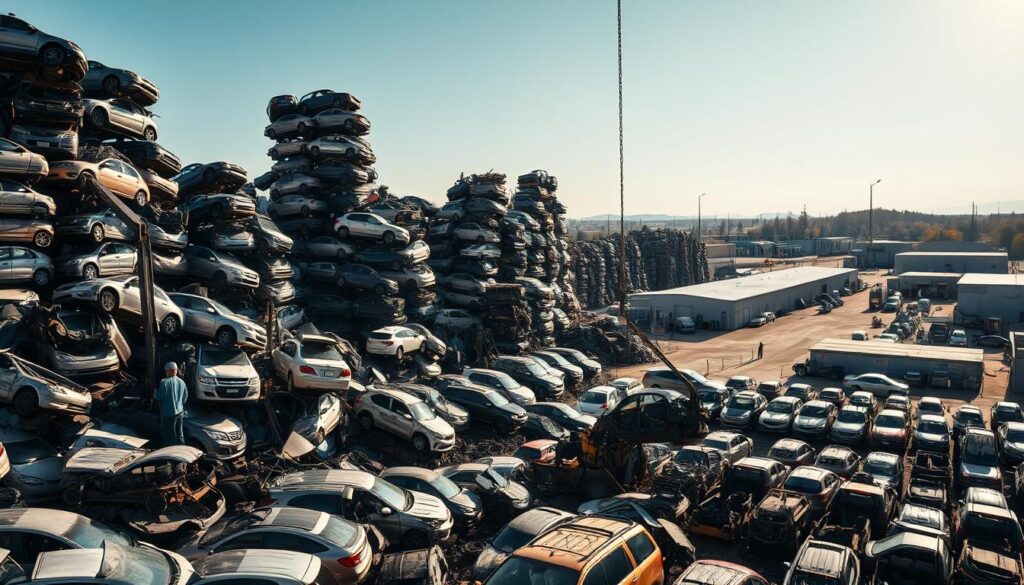
Before you take your old car to a recycling center, it’s important to prepare it. This makes the process smoother and keeps you and the environment safe. We’ll show you how to get your car ready for recycling.
Gathering Necessary Documents
To begin recycling, you need some important documents. These usually include:
- The vehicle’s title
- Registration
- Any service records or maintenance documents
Having these documents ready makes the recycling process easier.
Removing Personal Belongings
Take out all personal items from your car before recycling. Check:
- Glove compartment
- Trunk
- Under seats
Make sure you remove anything valuable or important to you.
Ensuring Vehicle Safety
To keep your car and others safe, follow these steps:
- Remove any hazardous materials such as batteries or fluids
- Ensure the vehicle is in a condition that is safe for towing or transport
By following these steps, you can ensure a safe and efficient recycling process.
Frequently Asked Questions About Car Recycling
Learning about car recycling can help you make better choices. When you think about recycling your old car, you might wonder what happens next.
We often hear wrong ideas about car recycling. We want to clear up these myths. Let’s talk about some common questions and wrong beliefs.
Common Misconceptions
Many think car recycling is hard and slow. But, reputable recycling facilities make it easy and quick.
Some believe old cars just get crushed and thrown away. But, most car parts can be recycled, like metals, plastics, and fluids.
- Some think recycling cars isn’t good for the environment. But, recycling really helps cut down waste and saves resources.
- Others think recycling places don’t follow rules. But, government regulations make sure they follow strict environmental rules.
What Happens to Car Parts?
When you recycle your car, different parts are treated in different ways. Here’s what usually happens:
- Metals and Alloys: They get melted down and used in new cars or other items.
- Plastics and Rubber: They’re processed and often used to make new parts or products.
- Oils and Fluids: They’re drained, recycled, or disposed of safely.
Knowing what happens in car recycling can make you more confident in recycling your car. We aim to make this process easy and clear for you.
The Role of Government Regulations
Regulations are key to making vehicle recycling green. They help keep our environment and health safe. This is done by controlling how cars are recycled and thrown away.
Understanding Local Laws
Car owners and recycling places need to know local recycling laws. These laws change by state and area. They tell us how to handle, take apart, and process cars.
- Research local regulations on vehicle recycling.
- Understand the requirements for documentation and reporting.
- Familiarize yourself with the standards for environmental protection.
Compliance and Standards
Following government rules is vital for recycling places to stay legal and green. They must stick to strict rules to lessen harm to the environment.
- Ensure proper handling and disposal of hazardous materials.
- Maintain records of vehicle processing and material disposal.
- Regularly audit and update practices to meet changing regulations.
By following government rules, we make sure car recycling is done right. It protects our planet and saves resources.
Tips for Responsible Disposal of Old Vehicles
When it’s time to get rid of your old car, making a smart choice is key. We’ll show you ways to recycle, donate, or repurpose your vehicle. We also offer tips on how to dispose of cars in an eco-friendly way.
Eco-Friendly Alternatives
Think about giving your car to a charity or non-profit. It helps a good cause and might even save you on taxes. Or, you could turn your old car into art or something useful. This way, you reduce waste and encourage creativity.
If you choose to recycle your car, pick a trusted place to do it. Look for local options that care about the environment. By doing this, you help make the car industry greener.